Why LLMs could be the key to solving Healthcare's biggest challenges

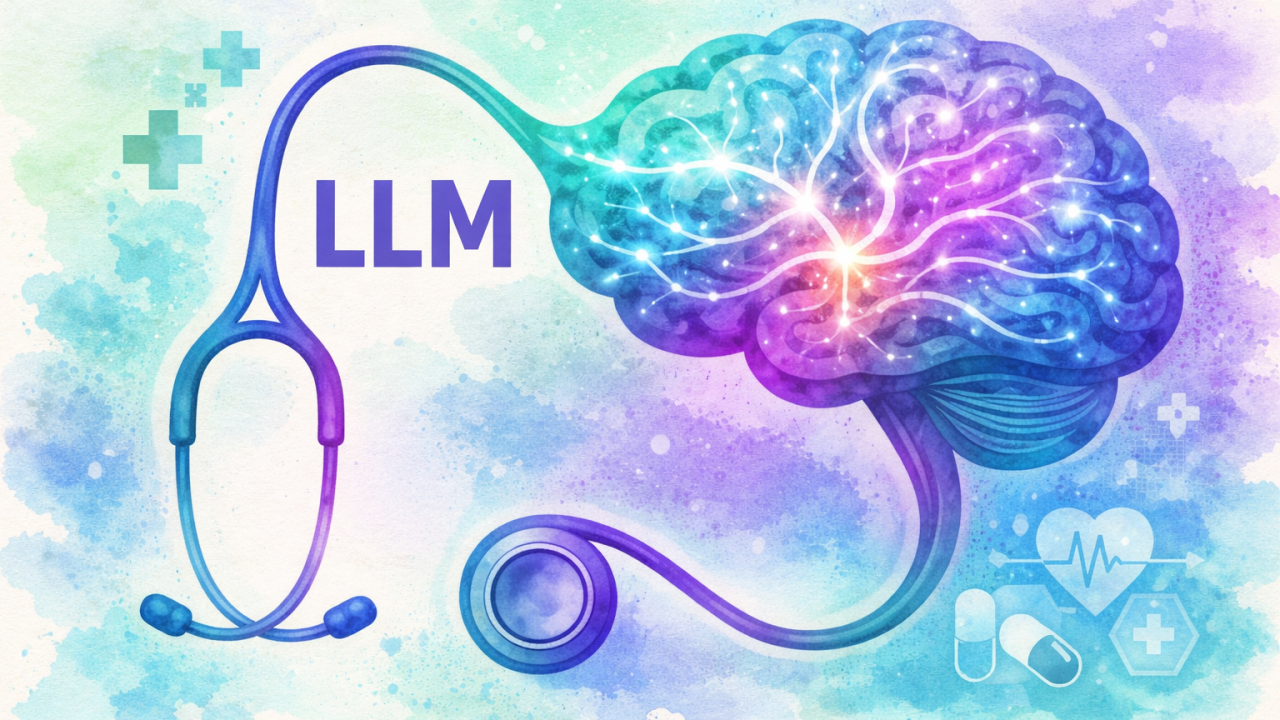
In the Digital Health landscape, Large Language Models (LLMs) are emerging as revolutionary tools. These models, trained on vast amounts of textual data, are capable of understanding and generating natural language.Initially used for generic applications, LLMs have recently been adapted specifically for the healthcare sector, offering solutions tailored for doctors, patients, healthcare institutions, and pharmaceutical industries. In this article, we will explore how LLMs are changing the face of medicine, with concrete examples, differences between models, and current applications.
What Is an LLM and How Does It Work in Healthcare?
An LLM is a type of artificial intelligence model that relies on transformer neural networks to analyze, understand, and generate natural language. These models can process vast amounts of information, such as electronic health records (EHR), scientific articles, medical images, and more, making them incredibly useful tools in healthcare settings. Their use ranges from assisted diagnosis and clinical data management to automating administrative tasks like procedure coding and report generation.
LLMs in Practice: Existing Products and Applications
Major AI players such as OpenAI, Google, Anthropic, and Mistral have developed models specifically for the healthcare sector. Some of these models are adaptations of general-purpose models like GPT-4 and Claude, while others are trained with medical-specific datasets, such as Google's Med-PaLM and Mistral Medical-tuned.
Here is a comparison of some of the leading LLM solutions applied to healthcare:
| Company | Product | Primary Target | Application |
|---|---|---|---|
| OpenAI | ChatGPT Health | Consumers, Healthcare Providers | Assisted diagnosis, medical coding, support for doctor–patient conversations |
| Med-Gemini, Med-PaLM | Developers, Healthcare Providers | Multimodal diagnosis, medical image analysis, clinical data management | |
| Anthropic | Claude for Healthcare | Consumers, Healthcare Providers (HIPAA-compliant) | Healthcare data management support, medical FAQs, diagnostics |
| Mistral | Mistral 7B (medical-tuned) | Developers, Healthcare Providers | Clinical documentation automation, medical Q&A |
Applications in Healthcare
LLMs have a variety of concrete applications in healthcare settings. Below are a few examples of how these tools are being used:
- Diagnostic Support and Treatment Suggestions
Models like Med-PaLM 2 are trained on specialized datasets like MIMIC-III to improve diagnostic accuracy and suggest treatments. These models can analyze EHRs and other data to propose diagnoses, even in complex scenarios like triage and urgent case management. - Automation of Clinical Documentation
One of the most promising uses of LLMs in healthcare is automating clinical documentation. Tools like GatorTron, trained on the EHR data of millions of patients, accelerate report generation and reduce physician burnout, allowing them to focus more on patient care. - Medical Research and Pharmaceutical Development
In research, LLMs accelerate the analysis of scientific articles, drug discovery, and clinical trial design. For example, Google's Med-Gemini can analyze medical images and genomic data to predict the risk of complex diseases, while Mistral helps generate innovative hypotheses for pharmaceutical research.
Differences Between Healthcare LLMs and General Models
General-purpose models like GPT-4 and Claude are known for their versatility, but they were not specifically trained for healthcare tasks. As a result, they tend to exhibit more variability in their results, with a higher risk of "hallucinations" (incorrect or irrelevant outputs). In contrast, healthcare models like Med-PaLM are fine-tuned on clinical and medical data, which enhances their accuracy in specific tasks such as medical reasoning, diagnostics, and healthcare data management.
A concrete example of this difference can be seen in diagnostic benchmarks. Med-PaLM scored 86.5% on MedQA, while general models like GPT-4 scored lower, ranging from 70% to 85%, due to their lack of healthcare specialization.
| Benchmark | Med-PaLM 2 (Healthcare model) | GPT-4 (General model) |
|---|---|---|
| MedQA (USMLE) | 86.50% | 70-85% |
| PubMedQA | 81.80% | ~75% |
| Radiological Diagnostics | N/A (often multimodal) | 41-62% |
Advantages and Limitations of Using LLMs in Healthcare
LLMs offer numerous benefits, such as improved diagnostic quality, operational efficiency, and optimization of clinical processes. However, there are also significant limitations that must be considered:
Advantages:
- Improved Decision Support: LLMs can quickly analyze large volumes of data to suggest diagnoses and treatment plans.
- Burnout Reduction: By automating documentation and other administrative tasks, LLMs allow doctors to focus more on patient care.
- Accelerated Research: LLMs facilitate the analysis of scientific papers, experiments, and drug discovery.
Limitations and Risks:
- Data Privacy and Security: Using sensitive data like electronic health records introduces risks related to data protection, requiring compliance with regulations such as HIPAA and GDPR.
- Reliability: LLMs can make diagnostic errors or suggest suboptimal treatments if not properly supervised.
- Bias in Data: Models trained on non-representative data may generate biased results, potentially affecting the quality of healthcare.
The Importance of Compliance and Certification
For adoption in clinical settings, LLMs must comply with strict regulations. In the U.S., HIPAA governs the protection of healthcare data, while the GDPR imposes restrictions on the processing of personal data in Europe. Additionally, the FDA considers artificial intelligence as a medical device (SaMD) and requires validation of models used for diagnostics.
What's next?
LLMs are rapidly becoming a critical resource in healthcare, with applications ranging from diagnosis and treatment to research and data management. However, their adoption must be accompanied by a strong focus on privacy, security, and regulatory compliance. While challenges remain, the benefits in terms of efficiency, care quality, and innovation are undeniable. With the proper regulatory support and continuous improvement, LLMs could become essential allies in the medicine of the future.